
All blogs
22.05.2026
-thumb.png)
Real View
How developers can maximize profitability and accelerate property sales today
The real estate market has changed significantly in recent years. Land prices remain high, construction costs continue to rise, financing has become more expensive, and tax burdens - especially VAT on new developments - are putting additional pressure on project profitability. At the same time, buyers are becoming more rational and price-sensitive, naturally leading to lower sales volumes and slower market absorption.
In such an environment, it is no longer enough to simply construct a building and expect the market to accept the product at the price the developer aims to achieve. This is particularly true in the second-home market, where buyers are not purchasing necessity, but lifestyle, emotion, and long-term value. Average, generic products are gradually becoming less profitable. Today, the greatest differentiator is no longer just location or construction quality, but the developer’s ability to create a differentiated, clearly positioned, and market-oriented product.
The era of generic developments is slowly coming to an end
For many years, a large part of the market operated through a relatively simple model. A developer would acquire land, construct a building, calculate construction costs, add the desired margin, and expect the market to accept the final price. During certain market cycles, this approach worked because strong demand compensated for many of the product’s weaknesses.
Today, that is no longer sufficient. Buyers compare projects more thoroughly than ever before. They are informed, actively monitor the market, and have a wide range of options. When a product lacks identity and emotional value, the market almost automatically applies downward pressure on price. The challenge for developers is that production costs have never been higher.
This creates a dangerous situation in which average projects enter a zone of reduced profitability. That is precisely why product differentiation is no longer a marketing add-on, but a fundamental prerequisite for successful sales and margin preservation.
.png)
Modern apartments with sea view - Rijeka
A project must start from the market, not from construction costs
One of the biggest strategic mistakes developers still make is starting a project from their own cost structure rather than from the market itself. The starting point should not be how much construction will cost, but what the maximum achievable value is at a specific location and what type of product the market truly wants there.
In other words, project development must begin with the principle of highest and best use. This means understanding which type of product can achieve the highest market value at a specific micro-location, for which buyer profile, with which amenities, and with what kind of lifestyle the product supports.
Only after that should the design process begin.
This represents a fundamental shift in thinking. Projects are no longer developed through the logic of “I built it, so someone must pay more for it.” Instead, projects must be developed through the logic of market absorption, differentiation, and value creation that buyers recognize and are willing to pay a premium for.
Professionalization of development has become the key to success
Modern real estate development requires a significantly higher level of professionalism than it did ten years ago. Decisions can no longer be made intuitively or based solely on a developer’s personal impression. Detailed market data and clear insights have become essential.
It is crucial to understand which products are currently being absorbed by the market, at what price points, how long sales processes take, which amenities create additional value, and which characteristics buyers now consider standard. Without such information, project planning becomes guesswork - and in today’s market cycle, guesswork is extremely expensive.
The most successful developers no longer observe the market solely through square meters and price per square meter. They analyze buyer profiles, lifestyles, spatial usage patterns, user expectations, and the emotional triggers that influence purchasing decisions.
That is precisely why modern development has become a multidisciplinary process in which market analysis, architecture, design, sales, and marketing must work together from the very beginning of the project.
Architecture and design alone are no longer enough
Architecture and design remain extremely important, but architects alone cannot define a market-successful product. That is not their primary role. Architects must be part of a broader development process involving market consultants, sales experts, and professionals who understand buyer behavior.
One of the biggest mistakes occurs when the market perspective is considered only after the design phase is completed. At that stage, it is often already too late for key adjustments.
If a project is being developed for the market, then from the earliest concept stage it is necessary to think about how the product will perform in sales and what will actually sell it. What will be its defining moment? What will buyers remember after a viewing? What will create emotion? What will justify a premium price?
In the second-home market, this is especially important because buyers are not simply purchasing property. They are purchasing the feeling of the lifestyle they will experience within that space.
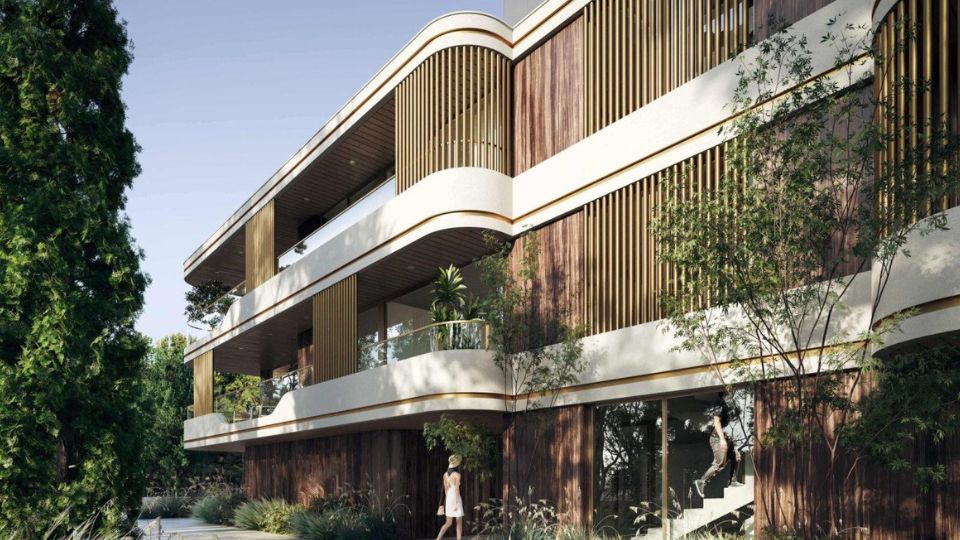
Exclusive coastal living: Luxurious seaside condos
Buyers do not purchase square meters - they purchase a lifestyle
That is why the best projects today are not necessarily those with the largest number of square meters or the most expensive materials. The most successful projects are those that truly understand how people will live within the space.
Will the buyer have sufficient wardrobe and storage space? Is there a properly designed master suite? Is the connection between indoor and outdoor spaces natural and intuitive? Does the vertical circulation between floors function well? Is there high-quality covered parking? Is there enough storage for a seasonal lifestyle? What is the feeling when someone enters the property for the first time?
These are the questions that directly influence sales speed and achievable pricing.
At the same time, developers are often overly focused on technical parameters that buyers do not emotionally experience. Discussions revolve around whether thermal insulation is 10 or 15 centimeters thick, while elements with far greater influence on purchasing decisions are overlooked.
Of course, construction quality, documented execution, and technical standards are extremely important. Today, they play a major role in presenting product quality and building buyer trust. However, they rarely sell a project on their own. What sells a project is the combination of rational quality and emotional differentiation.
Differentiation has become the main tool for preserving margins
In a market where costs are rising and buyers are applying pressure on prices, developers can no longer compete through average products in the long term. Generic developments enter direct price competition, which is the most dangerous position for any project.
On the other hand, differentiated products have the ability to create premium perception, achieve faster absorption, and maintain more stable pricing even during challenging market cycles.
This does not necessarily mean luxury in the traditional sense. Differentiation can exist in the concept, layout, feeling of space, architecture, privacy, terrace usability, connection with the surroundings, lifestyle amenities, or simply through a more intelligently designed product.
That is why the future of successful development will not belong to those who build the largest number of square meters, but to those who understand the market best and create products buyers genuinely want to purchase.
Blog author: Ivan Kovačić
May 22, 2026
Share
-list_thumb.jpg)
-(9)-list_thumb.png)
-(7)-list_thumb.png)