All blogs
25.06.2026
-thumb.jpg)
Remington insights
Embracing the Adriatic lifestyle: why living in Croatia beats the overcrowded Mediterranean coasts
There are two Mediterraneans. One is the Mediterranean of water-pistol protests, "tourist go home" graffiti, and apartments priced beyond the reach of the people who once lived in them. The other is the Mediterranean of empty pine coves, stone villages that have barely changed in a century, and a coastline where the loudest sound at sunset is still the sea itself. Both exist at the same latitude, under the same sun. The difference is Croatia.
For buyers comparing luxury real estate options across southern Europe, the question behind this article is a practical one: does it still make sense to buy on the saturated coasts of Spain, Italy, or France – or does the Adriatic now offer the better version of the same dream? The short answer: for anyone seeking luxury Croatia living rather than a crowded postcard, the Adriatic wins on space, on health, on authenticity, and increasingly, on long-term value.
The Adriatic sun: a climate built for living, not just visiting
Croatia's appeal starts with something no marketing department invented: light. The islands and coastal towns of Dalmatia and the Kvarner regularly log between 2,500 and over 2,700 hours of sunshine a year, according to data drawn from the Croatian Meteorological and Hydrological Service. Hvar alone is credited with close to 2,700 hours annually – among the highest figures on the entire Adriatic coast, a reputation that dates back to the 19th century when local physicians founded one of Europe's earliest health resorts built around the island's climate.
That sunlight is paired with low summer humidity, dry maestral winds, and a sea that is cleaner than almost anywhere else in the Mediterranean basin. Croatia consistently ranks among the EU leaders for bathing water quality. For buyers used to the haze and crowding of more "discovered" coastlines, this combination of bright, dry, mineral-rich air is not a footnote. It is the product..jpg)
Croatia vs. Costa del Sol: space and calm vs. density and price
Spain's Costa del Sol remains a genuinely strong property market – but increasingly for reasons that have little to do with tranquillity. New-build prices in Marbella now run from roughly €6,000 to €10,000 per square metre, with Benahavís and Estepona not far behind, according to the latest Marbella property market analysis, driven by a structural shortage of buildable coastal land and planning restrictions that show no sign of easing.
Spain welcomed more than 96.8 million international visitors in 2025, according to Euronews, and that volume shows up everywhere: in traffic, in beach capacity, and in the sheer density of development along the shoreline.
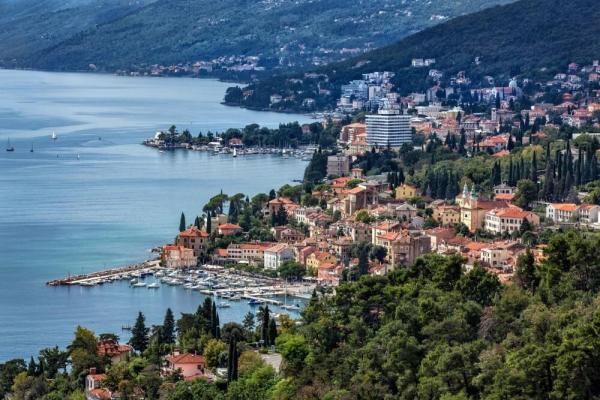
Opatija and the wider Kvarner region, by comparison, continue to offer prime coastal property at more accessible price levels than many established Mediterranean luxury markets, while providing a coastline that has not been developed to the same degree of saturation. The Croatian advantage is not simply about lower pricing; it lies in the authenticity of its locations, the limited availability of exceptional waterfront positions, and the opportunity to enjoy a highly desirable lifestyle in a setting where scarcity remains genuinely linked to place rather than to inventory constraints within an overdeveloped destination.
Croatia vs. the tourist-saturated coasts of Italy, Spain, and Portugal
In June 2025, residents in roughly twenty cities across Spain, Italy, and Portugal staged coordinated protests against overtourism, firing water pistols at tourists in Barcelona and disrupting hotel lobbies in Mallorca and Venice. CNN's coverage of the unrest described a continent-wide reckoning: locals priced out of housing, city centres reorganised around short-term rentals, and a growing sense among residents that their own coastlines no longer belong to them.
The Guardian reported the same pattern spreading from Lisbon to Venice within a single tourist season.
This is the structural risk buried inside a "bargain" on an overcrowded coast: the very popularity that inflates prices also erodes the experience those prices are meant to buy. Croatia has so far avoided this tipping point. Tourism is significant to the Croatian economy, but ownership patterns, planning law, and the sheer length of largely undeveloped coastline have kept the Adriatic from tipping into the same density crisis. Buying here still buys quiet..jpg)
Croatia vs. Cyprus: two models for selling the same sea
Spain and Cyprus have both built sophisticated marketing machines around Mediterranean living – sun-soaked lifestyle imagery, residency incentives, golf-and-marina branding. Cyprus in particular has leaned heavily into selling culture as much as climate: ancient history, year-round outdoor living, and an English-speaking, EU-passport-adjacent lifestyle pitched directly at Northern European and Middle Eastern buyers.
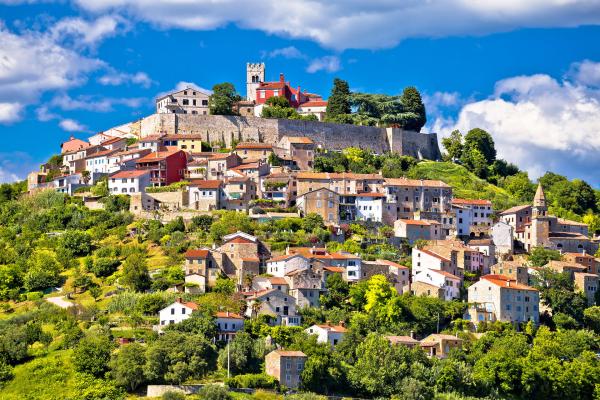
Croatia is only now catching up to that level of lifestyle storytelling – and it has a stronger hand to play. Where Cyprus markets a generically "Mediterranean" identity, Croatia can point to something more specific and harder to replicate: an Adriatic culture built on stone villages, Habsburg-era seaside elegance in towns like Opatija, and an unbroken relationship between architecture, sea, and rhythm of life that has not been flattened by fifty years of mass tourism infrastructure. The opportunity for Croatian luxury real estate is not to imitate the Spanish or Cypriot playbook, but to localise it – selling the Adriatic version of relaxed living, rooted in a place rather than a brochure.
The health case for the Adriatic: sun, sea, and clean air
Long before wellness became a global trend, Opatija earned its reputation as one of the Adriatic's premier health destinations. Its exceptionally mild climate, pristine air and unique blend of sea aerosols and lush forest vegetation have attracted visitors seeking rest and rejuvenation for well over a century. Today, the town's famous 12-kilometre Lungomare promenade and the shaded paths of Angiolina Park continue to encourage an outdoor lifestyle that combines gentle exercise with one of the cleanest and most pleasant microclimates on the Croatian coast.
Beyond aesthetics, the Adriatic lifestyle has a long-documented wellness dimension. Sea air carries trace minerals – iodine, magnesium and salt – that have been associated for over a century with respiratory and immune health benefits, which is precisely why coastal "climate therapy" resorts became fashionable across 19th-century Europe. Hvar's own historical health institutions, including a centre for allergy research founded by the Croatian Academy of Arts and Sciences, reflect just how early this part of the Adriatic was recognised for its therapeutic climate.
Add to that abundant vitamin D exposure, relatively low humidity compared with much of the Mediterranean, and a sea regularly rated among Europe's cleanest, and the case for the Adriatic shifts from purely emotional to genuinely physiological. Buyers are not only purchasing a view – they are investing in a healthier environment designed for year-round living..jpg)
Building material as memory: Brač stone, native wood, and Mediterranean minimalism
What makes a Croatian villa feel different from a generic Mediterranean new-build is, quite literally, what it is made of. The white limestone of the island of Brač – quarried since Roman times and used to build Diocletian's Palace in Split, as well as the lobby of the United Nations Headquarters in New York – remains one of the most distinctive building materials in Europe. (The enduring local legend that it was also used in the White House is almost certainly just that – a legend – but it speaks to how far this stone's reputation has travelled.)
Paired with native Istrian oak, terracotta, and lime plaster, Brač stone sits naturally inside the design language that global luxury brokers are now describing as "warm Mediterranean minimalism": clean architectural lines softened by raw, tactile, regionally authentic materials, rather than the colder international minimalism of a decade ago. Croatia does not need to import this trend – it has been quietly practising it since antiquity. The opportunity for new villas along the Opatija Riviera is to pair that material authenticity with the self-sufficient infrastructure today's luxury buyer expects: solar capacity, geothermal heating, and water-saving systems built into stone architecture that has already proven, over two thousand years, that it can last..jpg)
Why now: Opatija and the Kvarner as Croatia's quiet luxury frontier
Croatia's residential property market is forecast to keep growing through 2026, with coastal regions expected to outperform the national average thanks to constrained supply and rising foreign demand. Within that picture, Opatija and the Kvarner occupy a particular niche: a Habsburg-era resort town with a 150-year history of attracting European aristocracy, now repositioning for a new generation of international buyers who want the Adriatic without the saturation of Dalmatia's most famous names.
This is also where global affiliation matters. As the exclusive Christie's International Real Estate representative for Croatia – a network spanning nearly 50 countries and approximately 10,000 agents worldwide – Remington Christie's International Real Estate connects Opatija Riviera properties directly to the same global buyer pool considering Marbella, the French Riviera, or Cyprus. The difference is what that buyer finds when they arrive: a coastline that has not yet been asked to absorb more than it can hold..jpg)
Villa with pool, wellness area and an unforgettable view in Opatija
Everything you need to know about living and buying property on the Adriatic coast
Is Croatia cheaper than Spain's Costa del Sol or the French Riviera?
Per-square-metre prices for comparable prime coastal property are generally lower in Croatia. Opatija and the Kvarner are currently priced below Marbella's frontline market, although Dalmatian hotspots such as Dubrovnik and Hvar command premiums closer to Western Mediterranean levels.
Does Croatia have the same overtourism problems as Spain, Italy, or Portugal?
Not at the same scale. While Dubrovnik experiences seasonal congestion, Croatia overall has avoided the coordinated resident protests seen across Spain, Italy, and Portugal in 2025, and large stretches of the Adriatic coast remain genuinely uncrowded outside the peak summer season.
How many sunshine hours does the Adriatic coast get per year?
Coastal Croatia typically enjoys between 2,500 and approximately 2,700 hours of sunshine annually, comparable to or exceeding many of the Mediterranean's best-known sunbelt destinations.
Can foreign buyers purchase property in Croatia?
EU and EEA citizens can buy property in Croatia under the same conditions as Croatian nationals. Non-EU buyers can generally purchase residential property subject to reciprocity rules and should work with a local real estate agency and legal advisor to confirm the current legal requirements.
What makes Opatija different from Dalmatia for luxury buyers?
Opatija offers a more discreet, established, Central European-influenced version of Adriatic luxury. Located closer to Vienna, Munich, and Trieste than Split or Dubrovnik, it combines a distinguished 19th-century resort heritage with a quieter, more residential atmosphere.
Why more buyers are choosing Croatia
So, does living in Croatia beat the overcrowded Mediterranean coasts? The evidence suggests it does. With sunshine hours that rival or exceed Spain's, a coastline that has so far avoided the overtourism challenges seen in destinations such as Barcelona, Venice, and the Algarve, architectural traditions rooted in more than two thousand years of craftsmanship, and a luxury property market that remains competitively positioned compared with its Western Mediterranean counterparts, the Adriatic is no longer an alternative to Europe's best-known coastal destinations. Increasingly, it is becoming the destination discerning buyers choose first.
Interested in luxury property along the Opatija Riviera and the Kvarner? Explore the collection of exceptional homes offered by Remington Christie's International Real Estate, the exclusive Christie's International Real Estate affiliate for Croatia.
June 25, 2026
Share
-list_thumb.jpg)