
All blogs
03.09.2026
-(9)-thumb.png)
Real View
Why Croatia does not have a developed long-term rental market
Long-term rental in Croatia has yet to become a credible alternative to property ownership. While housing debates largely focus on property prices, mortgages, interest rates and subsidies, the professional rental market remains almost entirely overlooked.
The reasons extend beyond cultural preferences or the frequently cited “homeownership mentality”. The lack of institutional rental housing reflects how Croatia plans urban development, delivers residential projects, provides infrastructure and finances its real estate market.
Institutional rental housing as a market stabiliser
Across many developed European markets, institutional long-term rental has become an important housing model in recent years. Large funds, pension investors and specialised companies develop entire residential projects intended for long-term rental. These models are not designed solely for social housing, students or young families. They also help stabilise the wider market.
When sufficient professionally managed rental housing is available, the pressure to purchase a property decreases. The market becomes more balanced, while access to housing becomes more predictable over the long term.
Croatia currently has almost no projects of this kind.
“The challenge facing Croatia’s housing market is not limited to property prices. The deeper issue is the near absence of a credible alternative to ownership.”
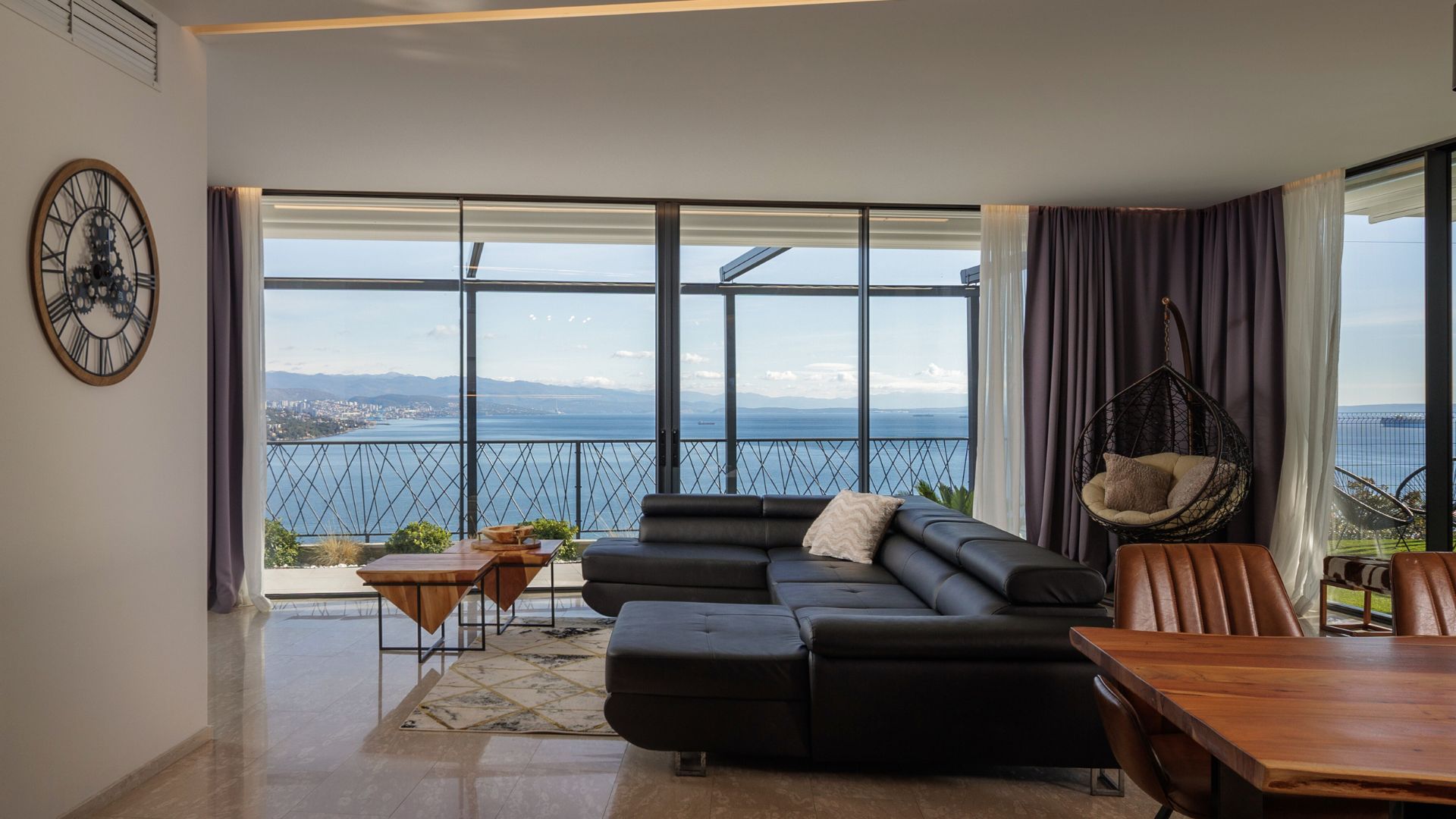
Modern duplex apartment for rent with unobstructed sea view – Opatija
Why Croatia struggles to attract institutional investors
This is not due to a lack of investor interest or available capital. Both capital and demand exist. The difficulty lies in Croatia’s limited ability to deliver projects with the scale, organisation and long-term predictability required by institutional investors.
Large investment funds do not typically enter markets composed of dozens of small developments on isolated plots. Institutional capital requires a fundamentally different framework: large master-planned districts, organised infrastructure, clear spatial plans, long-term regulatory certainty and the ability to manage a substantial number of residential units within a single system.
Croatia currently offers largely the opposite model.
Much of the market still relies on small developments containing only a few apartments. These are often built without a broader urban framework or adequate supporting infrastructure. Such projects may work for individual apartment sales, but they can rarely provide the foundation for a serious institutional rental market.
This is one of the key points frequently misunderstood in discussions about housing in Croatia. The issue is not simply the number of available homes. It is the structure of the market itself.
Fragmented development restricts the rental market
In established markets, the wider area is developed before individual buildings are constructed. Roads, utilities, public amenities and organised urban districts are created first. The construction of individual properties follows.
In Croatia, development still too often begins before the surrounding area has been properly planned and prepared.
The result is a market dominated by small, fragmented developments with limited infrastructure and poor connectivity. Such a market struggles to support credible build-to-rent projects or long-term rental portfolios of the kind sought by institutional investors.
This is not only an urban planning issue. It is also a question of economies of scale.
Large institutional rental models become viable only when a sufficient number of residential units can be managed within an integrated system. Only at that scale can professional management, maintenance and long-term investment stability be achieved.
Croatia rarely delivers projects of this kind.
Long-term rental requires a different financing model
Another challenge lies in the financing of real estate developments. Long-term rental requires a fundamentally different financial model from conventional residential sales.
A developer building homes for sale aims to complete the investment cycle and recover capital as quickly as possible through individual transactions. Long-term rental projects follow the opposite logic: income is generated over an extended period, while the asset’s value develops gradually.
Such projects therefore require a different approach to financing.
In established markets such as Germany, Switzerland, the United Kingdom and the United States, banking systems have supported these models for decades through long-term lending structures. In some cases, financing is focused less on the rapid repayment of principal and more on stable long-term income and the quality of the property as an asset.
This model is virtually absent in Croatia.
The Croatian banking sector continues to favour developments that conclude with the rapid sale of individual apartments. Long-term exposure to development projects remains considerably more limited. Most banks are still reluctant to support financing structures extending over 20 or 30 years, despite these being essential for the development of a substantial institutional rental sector.
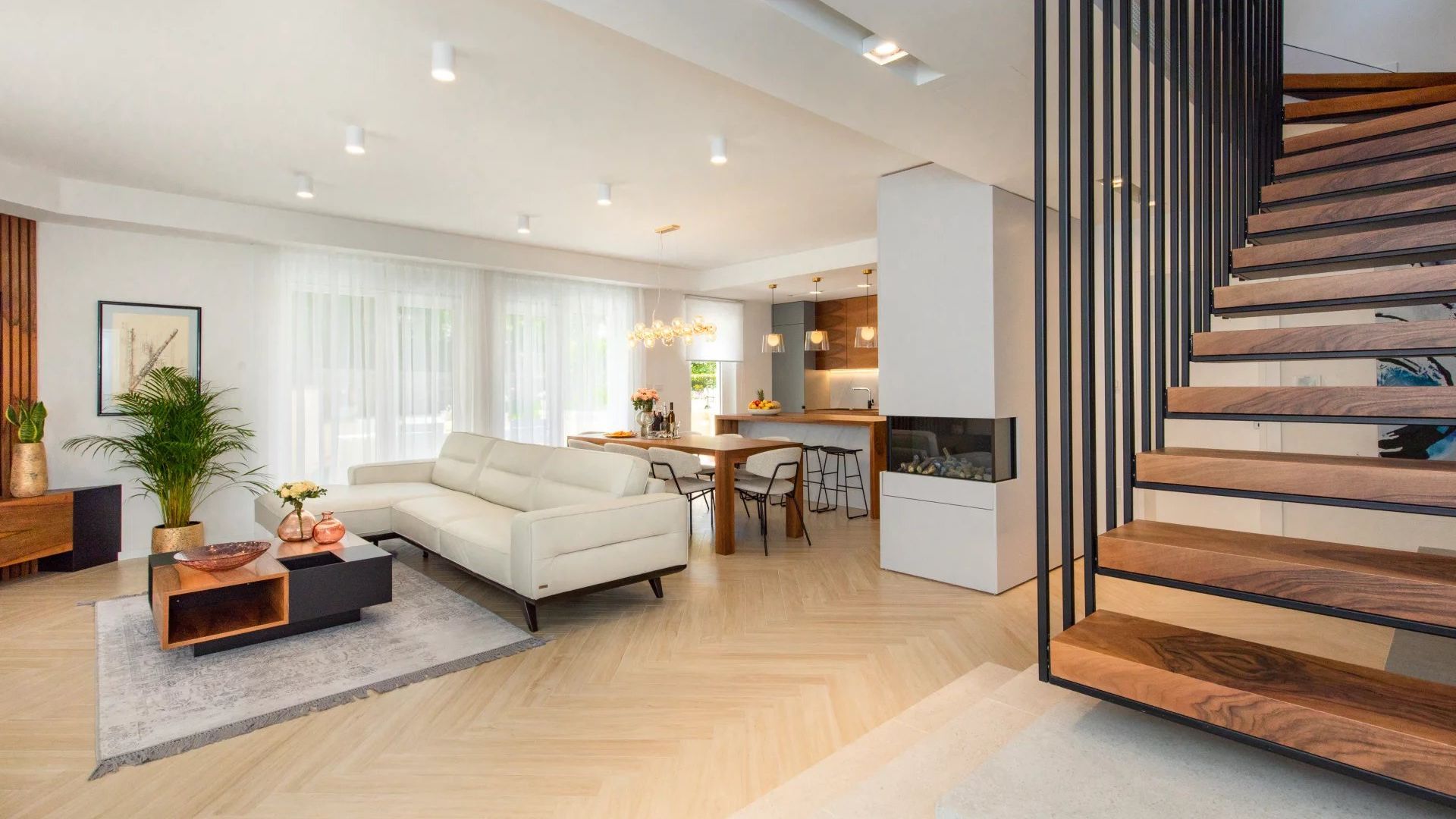
Charming villa for rent in the heart of Opatija
Legal uncertainty limits long-term capital
At first glance, this is often interpreted as excessive caution within the banking sector. In reality, the underlying issue is far more complex.
Much of the difficulty arises from legal uncertainty and the slow pace of judicial proceedings. Banks are unlikely to provide long-term financing for complex developments in a market where legal processes are slow, regulatory conditions are unpredictable and court proceedings can continue for years.
“Without legal certainty, there can be no serious long-term capital.”
This is one of the reasons Croatian developers continue to build predominantly for sale rather than long-term rental. Without stable, long-term financing, the economics of such projects are difficult to sustain.
What Croatia needs to develop a professional rental market
If Croatia introduced more carefully planned development zones, improved transport and utility infrastructure, and established a more predictable regulatory framework, banks would gain significantly greater confidence in financing institutional rental projects over the long term.
Only then would developers have a genuine economic incentive to undertake projects based on recurring rental income rather than relying exclusively on the rapid sale of apartments.
Within such a system, institutional investors and funds would become the natural purchasers of stabilised residential developments. In mature markets, this type of capital forms the foundation of the professional rental housing sector.
Homeownership remains the only credible option
It is notable that Croatia’s housing debate continues to focus almost exclusively on subsidising property purchases, while the development of a professional rental market receives little attention. This further reinforces a system in which purchasing a property is effectively the only reliable path to long-term housing security.
This is also one of the reasons upward pressure on property prices remains so strong.
The central problem facing Croatia’s housing market is not simply that property is expensive. It is that the market has yet to develop a credible alternative between homeownership and complete housing insecurity.
Blog author: Ivan Kovačić
September 3, 2026
Share
-list_thumb.jpg)
-(7)-list_thumb.png)
-(5)-list_thumb.png)